Russia’s history myths unmasked

In the years since the delivery of his landmark address at the 2007 Munich Security Conference , Vladimir Putin has repeatedly depicted his Russia as the peace-loving victim of NATO, or in his interpretation, of the overly dominant US. His speech ten years later (2017) at the Petersburg International Economic Forum is a case in point:
NATO was created as a Cold War instrument to oppose the Soviet Union and what was known as the Warsaw Pact. Now, there is neither the Warsaw Pact, nor the Soviet Union, but NATO is still there. Hence, the question: why? There is only one answer – no matter what they say, it is an instrument of US foreign policy.
Putin also describes NATO’s primary task that of posing a military threat to Russia: by incorporating sovereign states on Russia’s borders into the alliance (regardless of whether they were part of the Soviet Union or the Warsaw Pact before 1991) and by holding military training exercises and constructing new bases in the new countries in Eastern Europe.
Speaking at an expanded meeting of Russia’s Foreign Ministry Board in November 2021, Putin explained:
There have been several waves of expansion, and let’s look at where the military infrastructure of the NATO bloc is now – … right next to our borders…. Nevertheless, our recent warnings have had a certain effect: tensions have arisen there anyway…. [I]t is important for them to remain in this state for as long as possible, so that it does not occur to them to stage some kind of conflict on our western borders which we do not need, we do not need a new conflict.
A month later, he issued security ultimatums to the US. And two months after that, Russia launched its multi-vector attack on Ukraine, with tank columns and missile strikes. This full-scale war of aggression is still going on today – a war whose purpose, according to Putin and the Russian narrative, is to protect Russia from the US.
However, this myth of a peace-living Russia that, through no fault of its own, got caught up in the claws of that ruthless monster of militarisation, the US, ignores the fact that Russia itself worked for decades to achieve closer ties with NATO, and, for a while, even wanted to join NATO. The NATO–Russia Founding Act of 1997 became the centrepiece of these rapprochement efforts, establishing, as it did, a formal basis for diplomatic relations, complete with joint bodies and communication channels.
Historian and author Ignaz Lozo describes the origins and significance of the NATO–Russia Founding Act, which might, officially at any rate, still be in effect today.
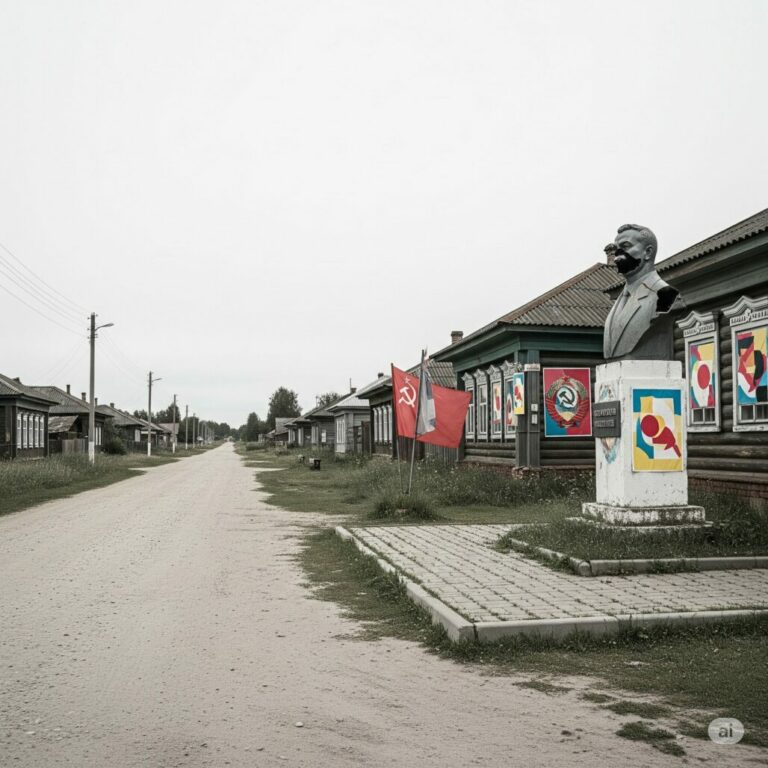
AI note: dekoder used Google Gemini to create this illustration
“Mutual relations, cooperation and security between NATO and the Russian Federation” are the subject-matter of the NATO–Russia Founding Act, which was signed in Paris on 27 May 1997 by the heads of states and governments of the NATO member countries, NATO Secretary General Javier Solana and Russian President Boris Yeltsin. It is a memorandum of understanding under international law.
Neither the West nor Russia has ever officially revoked the Founding Act, despite Russia’s 2014 occupation of Crimea and the full-scale war of aggression it launched against Ukraine in 2022. However, joint meetings and dialogue with Russia were suspended after the invasion (situation as of November 2025).
After signing the Founding Act back in 1997, Germany’s then Federal Chancellor Helmut Kohl said: “Our continent has been divided for decades. Today, the states of the Atlantic Alliance and Russia have agreed on cooperation. This is – and I am struck by how true this is even as I say it – unprecedented historically.” 1
The Founding Act grew out of a situation in which some of the former Warsaw-Pact states (Poland, Czechoslovakia [later the Czech Republic and Slovakia] and Hungary) were pushing to join NATO – as were Estonia, Latvia and Lithuania, three former Soviet republics that which had been involuntarily incorporated into the Soviet Union after their occupation by Soviet forces in 1940.
Wolfgang Ischinger, who was Political Director-General at the German Federal Foreign Office in1997 and Chairman of the Munich Security Conference from 2008 to 2022, recalls Federal Chancellor Kohl taking great pains to avoid offending the sensibilities of the Russian leadership: “Then Kohl said: Stop there, careful, I will have to talk to Boris Yeltsin about that first. And then Kohl came back and said: Well, they’re not happy about the idea of NATO enlargement, of course. But they’re willing accept it if it is coupled with a parallel transformation of relations between NATO and Russia. Then we put together a “two-pillar strategy” in the Federal Foreign Office on that basis. Our thinking was: the invitation to new members is the one pillar. And the other pillar is the transformation, deepening and reform of the NATO–Russian relationship.”2
By signing the NATO–Russia Founding Act, the Russian leadership was also affirming the principle of states’ freedom of alliance with respect to military alliances as well as the inviolability of borders. The relevant passage of the Act3 reads as follows:
Consistent with the OSCE’s work on a Common and Comprehensive Security Model for Europe for the Twenty-First Century… NATO and Russia will seek the widest possible cooperation among participating States of the OSCE with the aim of creating in Europe a common space of security and stability, without dividing lines or spheres of influence limiting the sovereignty of any state.
In signing the NATO–Russia Founding Act, the Russian leadership was also affirming the principle of states’ freedom of alliance with respect to military alliances as well as the inviolability of borders.
NATO and Russia agreed in the Act to establish a Permanent Joint Council. This body is to meet regularly, according to the Act:
The Permanent Joint Council will meet at the level of Foreign Ministers and at the level of Defence Ministers twice annually, and also monthly at the level of ambassadors/permanent representatives to the North Atlantic Council. The Permanent Joint Council may also “meet, as appropriate, at the level of Heads of State and Government.… Under the auspices of the Permanent Joint Council, military representatives and Chiefs of Staff will also meet; meetings of Chiefs of Staff will take place no less than twice a year, and also monthly at military representatives level.
The Permanent Joint Council was further developed over time and should not be confused with the NATO-Russia Council, which was established in Rome in May 2002. The document establishing the NATO-Russia Council was signed on Russia’s behalf by President Vladimir Putin.
In 1999, two years after the NATO–Russia Founding Act was signed, the first round of NATO enlargement took place, and the Czech Republic, Poland and Hungary joined the alliance.
The easing of political tensions at the end of the Cold War, 1989/1990, continued and the relationship grew stronger. Just how far this process had come by February 2001, was apparent when NATO’s Secretary General of the time, George Robertson, was received by President Putin in connection with the opening of a NATO information office in Moscow. Temporary differences between Moscow and the West were resolved by the two sides at the diplomatic level, for example, after NATO’s 1999 military action against the Belgrade regime of Slobodan Milošević, who had used massacres, terror and military force in his brutal oppression of the Albanian majority in Kosovo.
In response to the NATO intervention, Moscow did put a stop to all cooperation for a short time. It was Putin who agreed with Secretary General Robinson on 16 February 2000 on the resumption of the relations between NATO and Russia.
Various points relating to the structure of cooperation between Russia and NAT are agreed in the NATO–Russia Founding Act, including that:
Russia will establish a Mission to NATO headed by a representative at the rank of Ambassador. A senior military representative and his staff will be part of this Mission for the purposes of the military cooperation. NATO retains the possibility of establishing an appropriate presence in Moscow, the modalities of which remain to be determined.4
On 18 March 1998, the Russian Federation’s diplomatic mission to NATO was officially established. The person leading this mission usually also served as Russia’s ambassador to Belgium.
Of particular relevance for placing the Founding Act in its proper historical context is the recognition that 1997 was not, in fact, the pivotal year when it comes to the new easing of tensions between Moscow and NATO. The path that would lead from confrontation to cooperation was laid well before that by the policy of Mikhail Gorbachev, Soviet leader from 1985 to 1991. Boris Yeltsin continued this policy, and so for the first decade of the 21st century, did Putin.
On 24 July 1990, and hence in the Gorbachev era, Nikolai Afanasyevsky became the first permanent representative of the Soviet Union to NATO. Upon the collapse of the Soviet Union, he retained this post, though he was then representing the Russian Federation. On 27 January 1994, and thus in the Yeltsin era, NATO and Russia agreed on a programme for military cooperation and joint training exercises.
Relations were lifted to a new level of cooperation and consultation with the signing of the NATO–Russia Founding Act and the establishment of the Permanent Joint Council NATO-Russia relations, though. They had not been institutionalised until then.
Russia supported the US in the “war on terror” after 11 September 2001. For a short time, there was even talk of Russia joining NATO. Tensions between Moscow and NATO have been rising again since 2007.
However, as I mentioned above:
To date, neither side has ever issued formal notice of the revocation of the NATO–Russia Founding Act.
We are publishing this piece in cooperation with the German section of the Deutsch-Russische Geschichtskommission (Joint Commission for Research into the Recent History of German-Russian Relations) and BKGE (Federal Institute for History and Culture of the Germans in Eastern Europe, Oldenburg).
Gesine Dornblüth und Thomas Franke (26.05.2022): Die NATO-Russland-Grundakte. Aus einer sicheren Zeit. Radio-Bericht, Deutschlandfunk.
Gesine Dornblüth und Thomas Franke (26.05.2022): Die NATO-Russland-Grundakte. Aus einer sicheren Zeit. Radio-Bericht, Deutschlandfunk.
Founding Act on Mutual Relations, Cooperation and Security between NATO and the Russian Federation (27 May 1997)
Founding Act on Mutual Relations, Cooperation and Security between NATO and the Russian Federation (27 May 1997)