Russia’s history myths unmasked

Source: V. Putin: “Crimea Speech” (18 Mar. 2014), Address before the Federal Assembly (4 Dec. 2014)
Objective: Justification of occupation and annexation of Crimea
TO ARTICLEThat Crimea has always been Russian is a myth used by Putin to justify the 2014 unlawful annexation of the Ukrainian peninsula. Despite taking liberties with historical fact, this narrative has had a powerful influence within Russian society and elsewhere, awakening a nationalist euphoria in some, undermining the political resistance of others.
Historian and author Ignaz Lozo sketches in some of what Russia’s Crimea narrative leaves out: from the history of the Crimean Tatars to Russification during the Tsarist and Soviet periods, to Putin’s military seizure of Ukrainian territory.
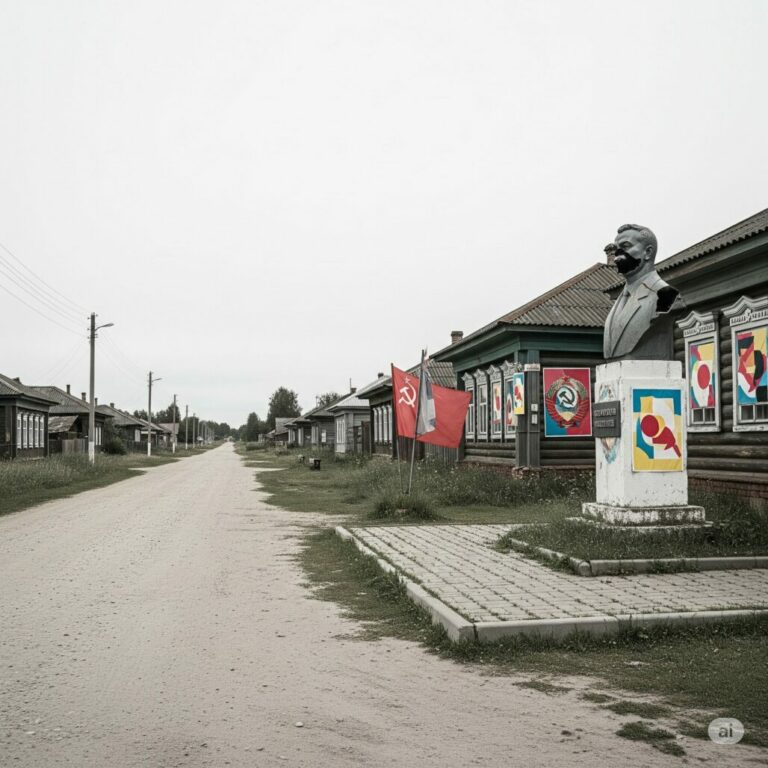
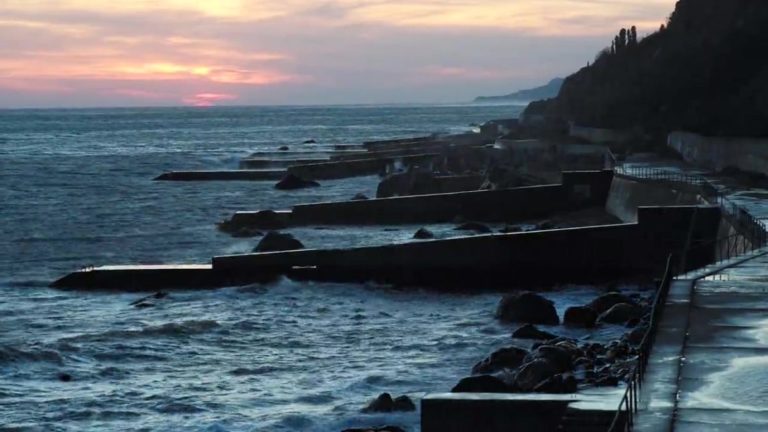
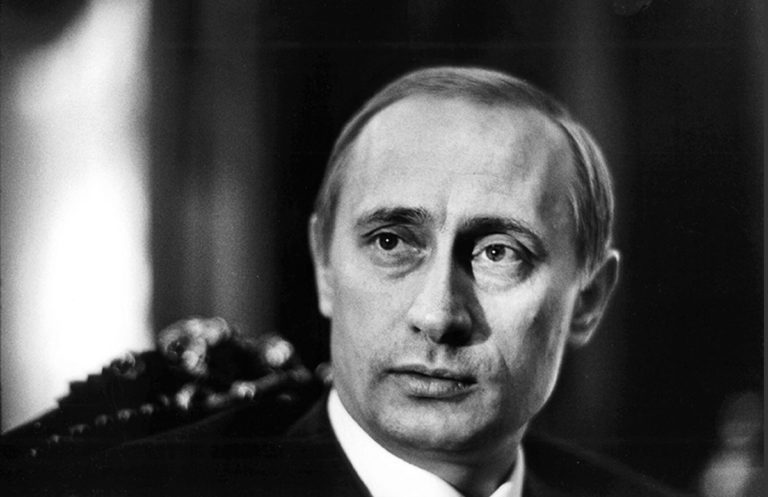
AI note: dekoder used Google Gemini to create this illustration
On 27 February 2014, Russian special forces, who were armed and wore no identifying insignia, occupied the parliamentary building in the capital city of Simferopol. The legitimate prime minister of the Autonomous Republic of Crimea, Anatolii Mohyliov, was removed from office and replaced by Sergey Aksyonov a member of the Verkhovna Rada (Crimea’s parliament) from the minor party Russian Unity.
These events unfolded shortly after the end of the months-long Euromaidan protests in Kyiv and other Ukrainian cities. The demonstrations, calling for closer ties with the EU, began when Ukraine’s pro-Russian president, Victor Yanukovich, bowing to pressure from Moscow, made an abrupt U-turn on this issue. Yanukovych eventually attempted to forcibly suppress the protests. The movement culminated with Yanukovych fleeing Kiev for Russia during the night of 21 February and his removal from office on 22 February. Unarmed observers sent to Ukraine by the OSCE on 4 March were refused entry to Crimea by the Russian leadership.
Vladimir Putin gave a speech in the Kremlin on the annexation of Crimea on 18 March. That same day, he and others, including his Crimean viceroy, Sergey Aksyonov, signed the “accession agreement”.
In his speech on the unlawful annexation, Putin portrayed it as a legitimate act of Russian reunification, comparing it to the restoration of German unity in 1990. He referred to the fake referendum conducted two days earlier – in which Crimean voters were not given the option of voting to preserve the status quo. Putin also invoked history, at considerable length, specifically mentioning the 1783 annexation of Crimea by Empress Catherine II, who declared the peninsula to be a part of Russia “from now until the end of time”. He added, with an air of pathos, that Crimea had always been an inseparable part of Russia in people’s hearts.
Crimea is where our people live
Putin in December 2014
Nine months later, after the imposition of the first Western sanctions, Putin accorded even greater historical significance for Russia to Crimea in an address before the Federal Assembly on 4 December 2014:
It [the annexation of Ukrainian Crimea– dek.] was an event of special significance for the country and the people, because Crimea is where our people live, and the peninsula is of strategic importance for Russia as the spiritual source of the development of a multifaceted but solid Russian nation and a centralised Russian state. It was in Crimea, in the ancient city of Chersonesus, or Korsun, as ancient Russian chroniclers called it, that Grand Prince Vladimir was baptised before bringing Christianity to Rus … Crimea, the ancient Korsun or Chersonesus, and Sevastopol have invaluable civilisational and even sacral importance for Russia, like the Temple Mount in Jerusalem for the followers of Islam and Judaism. And this is how we will always consider it.
The propagation of this narrative serves two main purposes. One was, and is, legitimation of the annexation of Crimea – which was in clear violation of international law – in the eyes of the West. While Putin did not convince many Western governments with this, he did succeed in dampening public outrage in the West over the violation of international law and occasionally managed to make Russia’s incorporation of Ukrainian territory seem understandable to some.
In Russia, the illegal annexation (which was, of course, not referred to as such) was widely celebrated within the population, and Putin, who seeks to revive Russian national pride, used it as a basis for the construction of collective (Russian) identity.
Starting in March 2014, the slogan Krym nash (Crimea belongs to us) rapidly became extremely popular in Russia, where expressed the patriotic mood created by social media and the Kremlin-controlled television.
Crimea has a tumultuous history, and at closer look at it – or even just at developments from the late Middle Ages onwards – puts paid to the Putinian myth of Crimea as sacred for Russians.
Crimea came under Ottoman rule in 1475 and remained so for about three centuries. Before that, the peninsula was ruled by a variety of peoples or principalities. However, the Slavs, and the Kyivan Prince Vladimir in particular, had never managed to dominate Crimea and bring it under long-term control.1
The Russo-Turkish war of 1768–1774 brought the centuries of Ottoman rule on the peninsula to an end. The Russian Empire emerged from that conflict with strong influence over the Crimean Khanate, which was accorded formal independence. Influence alone would not do for Catherine the Great though, and she annexed Crimea in 1783.
The majority of the Crimean Tatars fled to the Ottoman Empire. Under Catherine, the Russification and oppression of the Crimean Tatars began.2
In 1853, the Russian Empire launched what would become known as the Crimean War against the Ottoman Empire, with the aim of gaining access to the Mediterranean and strengthening its influence in the Balkans. However, the United Kingdom and France, and later Sardinia–Piedmont as well, entered the conflict on the Ottoman side, and Russia sued for peace in 1856. Tsar Alexander II accused the Muslim Crimean Tatars of betraying Russia (an accusation that Stalin would also make during World War II), and a new wave of persecution and emigration began.
In 1857, Alexander II spoke quite openly about “cleansing the Tatars from all of Crimea” in order to replace them with “peasants from the interior provinces”.3
According to the Russian Empire’s first general census, which was carried out in 1897, Russians accounted for only 33 percent of the Crimean population at that time. Crimean Tatars still made up the majority of the population.
The Soviet era saw the return of Russification measures, but only after the mass deportations of Crimean Tatars in 1944, which were so brutal that many Tatars died before the transports reached their destination (Stalin had most of them deported to Uzbekistan).
In the 1950s, the Crimean Tatars began to demand reparations for the horrible injustice that had been inflicted upon them. Stalin’s successors, Khrushchev and Brezhnev, both acknowledged the injustice but refused to allow the Tatars to return to their homeland. Protests by the Crimean Tatars in Uzbekistan in 1966/67 were violently suppressed by police, with the assistance of the KGB. Everything changed under Gorbachev though: starting in 1987, Crimean Tatars were allowed to return to their homeland. They now make up around twelve percent of Crimea’s population – although only about half of the deportees opted to return.4
Under Putin, Crimean Tatar men are being forced into military service to fight in Ukraine, while Crimean Tatar organisations and activists are being persecuted. The entire population has been formally Russified, in the sense that they have been forced to take on Russian citizenship. Schools in Crimea have been prohibited from teaching the Ukrainian language since 2023. Public commemoration of Stalin’s deportations and murders of Crimean Tatars, which was legal while Crimea was still under Ukrainian sovereignty, has been banned. In 2014, Russia began to develop a system of repression in Crimea and, since 2022, has been extending it to each new Ukrainian territory it occupies.
That Crimea has always been a part of Russia, as Putin claims, is an absurd and ahistorical narrative, but it is also one that has been partially successful in serving its purpose.
We are publishing this piece in cooperation with the German section of the Deutsch-Russische Geschichtskommission (Joint Commission for Research into the Recent History of German-Russian Relations) and BKGE (Federal Institute for History and Culture of the Germans in Eastern Europe, Oldenburg).
See Kerstin S. Jobst: “Über die „unvergleichbare Krim”. In: Aus Politik und Zeitgeschichte 6-8/2024, pp. 40– 46, here: p. 41
See Ignaz Lozo: Gorbatschow – Der Weltveränderer. Freiburg, Basel, Vienna 2024, p. 264
Russian Historical State Archive historisches Staatsarchiv (RGIA), f. 384, op. 8, d. 434, I.23, cited in Valery E. Vozgrin, Istoriya krymskikh Tatar, vol. 2, Simferopol 2013, p. 616. In: Rory Finnin: Die Krim und die Krimtataren. Aus Politik und Zeitgeschichte 6-8/2024, p. 28
See Lozo: Gorbatschow – Der Weltveränderer, p. 264